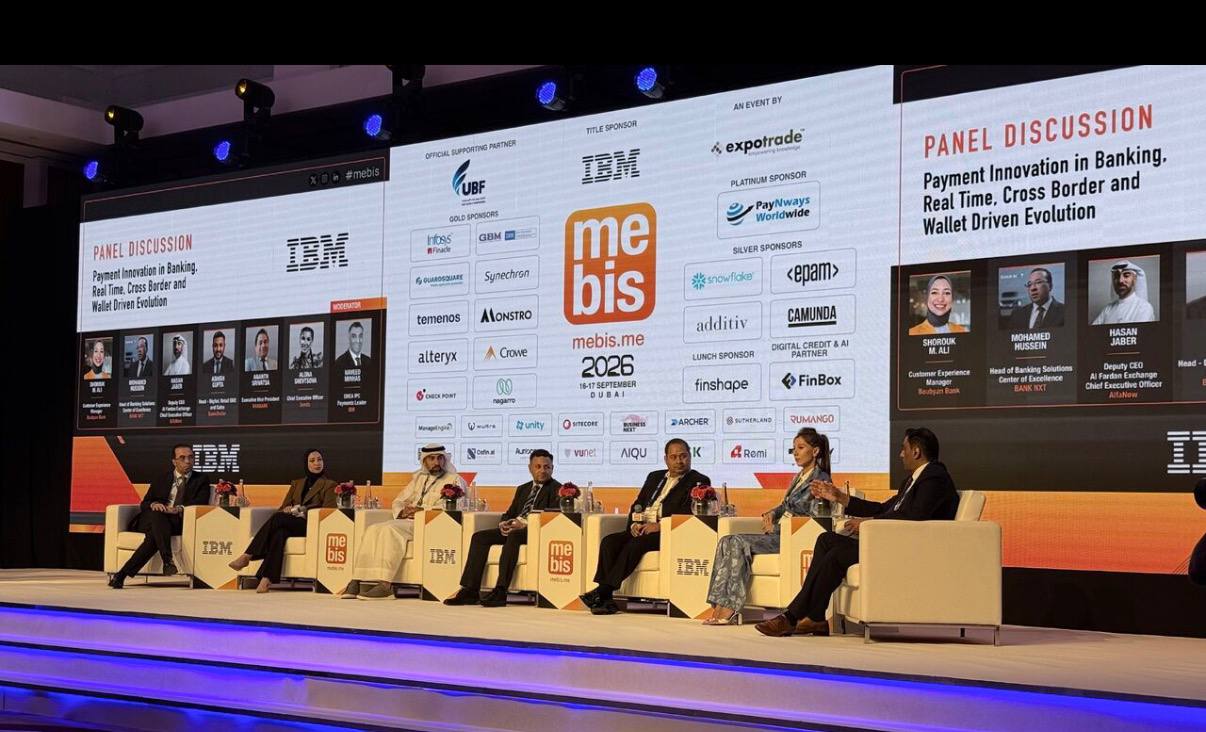

At the Middle East Banking Innovation Summit, Sends CEO Alona Shevtsova sat with senior banking and payments executives to explain how instant payments, digital wallets and cross-border infrastructure are being reshaped.
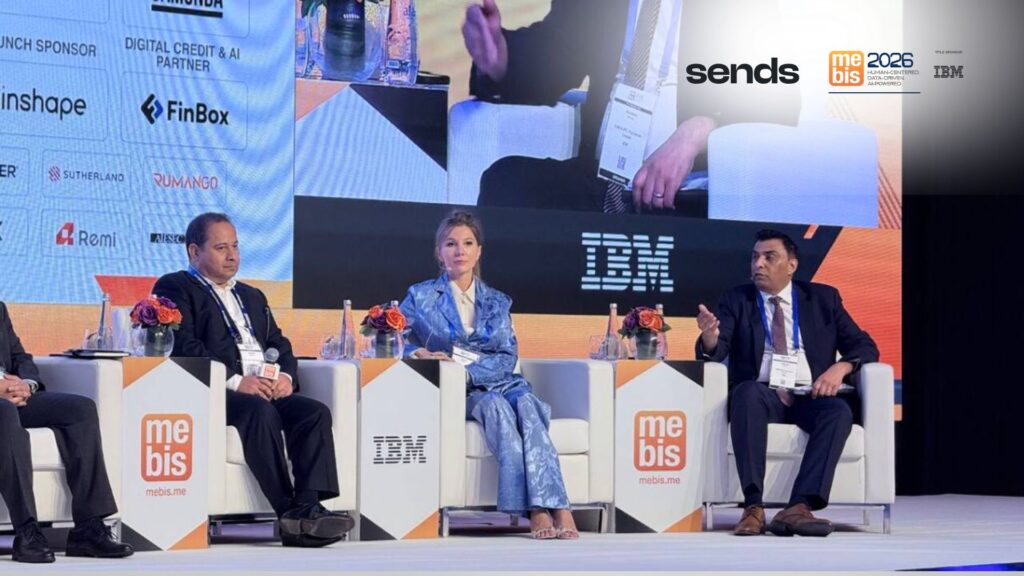
MEBIS 2026, the seventeenth outing of the Middle East Banking Innovation Summit, was held on 17 September and drew banking, fintech and technology leaders to Jumeirah Emirates Towers in Dubai. One of the sector figures taking part was Alona Shevtsova, CEO of Sends, who contributed to the panel discussion “Payment Innovation in Banking: Real Time, Cross Border and Wallet Driven Evolution,” a session devoted to explaining the pressures behind the payment systems the region will rely on next.
The other speakers in the session were Hasan Jaber, Deputy CEO at Al Fardan Exchange and CEO of AlfaNow; Ananth Srivatsa, Executive Vice President at RAKBANK; Mohamed Hussein, Head of Banking Solutions Center of Excellence at BANK NXT; Kamran Khan, Executive Director, Product Innovation & Implementation (EMEA) at First Abu Dhabi Bank; Ashish Gupta, Head of Digital, Retail SME and Sales at BankDhofar; and Naveed Minhas, EMEA IPC Payments Leader at IBM.
In effect, the panel worked through three questions: which activities are already producing measurable value for institutions using instant settlement, how wallets and progressively linked digital finance ecosystems are changing what customers assume a payment should feel like, and what has yet to be built before transfers between countries clear more quickly and run more cheaply.
Interoperability drew particular attention. Put simply, because value now crosses platforms, currencies and borders within seconds, banks and fintech providers must plug traditional banking systems into newly built rails while security, regulatory duties and operational resilience all hold firm.
“The future of payments will not be defined by a single technology or payment method. The real opportunity is in connecting the ecosystem around the customer. Real-time payments, wallets and cross-border infrastructure need to work together so that moving money becomes simpler for the user, while the technology, compliance and risk infrastructure behind that experience continues to evolve,” explained Alona Shevtsova, Sends’ chief executive.
Dubai forms part of a wider pattern of international industry debate in which Alona Shevtsova has featured during 2026. Earlier in the year she joined expert panels at PAY360 in London, one looking at agentic AI applied to AML and KYC work and another at how embedded finance is developing, and she also spoke in Riyadh at sessions on digital finance, blockchain, risk and AI.
There is a commercial logic to the MEBIS slot as well. It signals the closer relationship Sends is building with the Middle East financial ecosystem, in a region that keeps committing capital to digital banking, instant payment infrastructure and fresh approaches to delivering cross-border financial services.
The summit is aimed at C-level banking executives, together with technology leaders and innovators working across the Middle East. Its 2026 curriculum spans intelligent automation and AI, payments innovation, digital banking, open banking, embedded finance, data strategy, cybersecurity and the financial infrastructure of the generation to come.
About Sends
Sends is a financial technology company based in the UK that provides payment services to business and personal customers operating in home and overseas markets. Its legal entity, Smartflow Payments Limited, trades under the Sends name and is authorised by the Financial Conduct Authority to act as an Electronic Money Institution.
